
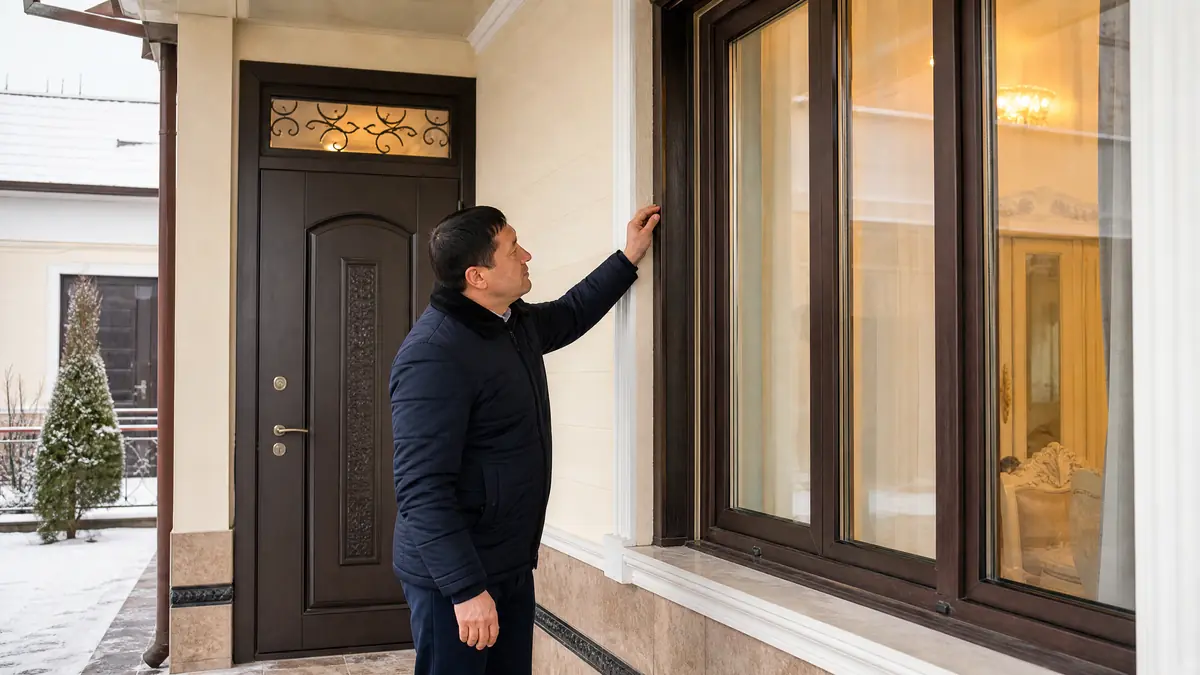
Checking House Windows and Doors Before a Winter Rental
Even a small draft can spoil the experience of staying in a private house during winter. Learn how to inspect windows, doors, locks, and weatherstripping yourself before tenants move in.
Why Should You Check Windows and Doors Before a Winter Rental?
Before renting out a private house in winter, make sure that all windows and doors close tightly, do not let in noticeable drafts, and have properly functioning locks, handles, and weatherstripping. These elements directly affect residents' everyday comfort: even a well-heated room can lose heat quickly if cold air enters through gaps.
Winter conditions in Uzbekistan vary by region, so you should not rely solely on the calendar or the type of construction. The actual condition of each window and door matters more. Pay particular attention to rooms tenants will use every day: bedrooms, the living room, kitchen, bathroom, and entrance area.
An inspection is useful not only for future tenants. For property owners, it is an opportunity to identify minor problems in advance, avoid repeat viewings due to complaints, and describe the property's condition more accurately in the listing.
Where Should You Start When Inspecting Windows and Doors?
Start by walking through the house systematically: open and close every window and door, inspect the joints, check the handles and locks, and look for damage. Do not limit your inspection to the front door or the living room windows.
It is easier to move through the rooms in one direction, for example, from the entrance toward the back of the house. This helps ensure that you do not overlook rarely used rooms, utility areas, or additional exits.
Before the inspection, prepare:
- A sheet of paper or notebook for taking notes;
- A flashlight for checking hard-to-reach areas;
- An ordinary sheet of paper for checking how tightly window sashes close;
- A soft, dry cloth for cleaning surfaces;
- A phone for photographing any defects you find.
Inspect the structures in good lighting. If it is cold outside, some sealing problems become easier to detect. There is no need to disassemble hardware or attempt to repair complicated mechanisms yourself.
How Do You Check Windows for Drafts?
To check a window for drafts, inspect the joint between the sash and frame, examine the condition of the weatherstripping, and pay attention to any cold air moving near the closed window. Repeat the procedure in every room.
1. Check That the Window Sashes Close Properly
Open the window and close it normally. The sash should move without excessive force, and the handle should lock into its operating position. If you have to push hard to close the window or the handle sticks, the mechanism may need inspection.
Do not try to compensate for a malfunction by applying excessive pressure, as this could make the hardware problem worse.
2. Inspect the Weatherstripping
The rubber or other type of weatherstripping specified by the design should run around the entire perimeter without noticeable tears or sections coming loose. Pay attention to the corners, the bottom of the sash, and the joints.
If the material is cracked, has lost its shape, or has come away from its position, the window may not close tightly enough. In this case, determine whether the weatherstripping needs replacing or the window needs adjustment.
3. Use the Paper Test
Place a strip of paper between the sash and frame, close the window, and gently try to pull the paper out. Repeat the test at several points around the perimeter.
If the paper slides out easily in one area but is held more firmly in another, the pressure may be uneven. This is not a complete airtightness test, but it is a simple way to identify a possible problem.
4. Check for Condensation
Look for moisture on the inside surface of the glass and around the frame. Also inspect the windowsill and the lower corners of the window opening.
Condensation may be related to air humidity, insufficient ventilation, or the characteristics of the window itself. It should not automatically be treated as proof that the insulated glass unit is defective. It is important to establish the cause before promising tenants that they will not experience this problem.
What Should You Look for When Inspecting Window Frames?
A window frame should be intact, stable, and free of noticeable damage that interferes with normal use. Inspect not only the glass but also the structure surrounding it.
Check that:
- There are no cracks or deformations in the frame;
- The areas where the frame joins the wall are not damaged;
- There are no noticeable gaps around the window reveals;
- The windowsill is not loose;
- There are no signs of moisture, darkening, or deterioration of the finish;
- The hinges and locking mechanisms work properly.
Pay particular attention to the points where the window structure meets the wall. Even a properly functioning window can let in cold air if the problem is not with the sash but with the installation joint or the finish around the opening.
If you find signs of persistent dampness, mold, or material deterioration, investigate the cause. Simply applying a cosmetic treatment to the surface will not solve the problem if the source of moisture remains.
How Do You Check Exterior and Interior Doors?
Before renting out the house, make sure the front door opens and closes freely, fits tightly against the frame, and has a lock and handle that work without sticking. Interior doors should also function properly and not obstruct passage.
Front Door
The front door is especially important in winter because residents use it regularly to enter and leave the house. Check the following components:
- Lock. The key should turn without excessive force, and the mechanism should not stick.
- Handle. Check that it is securely attached and that the opening mechanism works properly.
- Hinges. The door should not sag noticeably or scrape against the floor.
- Frame. Inspect the joints between the door panel and the frame, as well as the frame's connection to the wall.
- Weatherstripping. Check that weatherstripping is present and in good condition around the perimeter.
- Threshold. Make sure there is no obvious gap between the door and the threshold that allows cold air to enter.
If the front door is made of metal, pay attention to its interior surface. Signs of moisture, damaged finishes, or condensation may indicate that a closer inspection is needed.
Interior Doors
Interior doors do not necessarily need to provide the same level of airtightness as the front door. However, they should close without obstruction, have no dangerous damage, and allow rooms to be used normally.
Check whether the door panel catches on the floor, whether the handles and latches work properly, and whether the hinges are loose. If the house has a bathroom door, make sure it can be opened and closed from both inside and outside in the manner intended by its design.
Also inspect doors leading to utility rooms and service areas. Tenants should know in advance which rooms they are allowed to use.
What Should You Do If You Find Problems?
It is best to fix any problems before tenants move in. If that is not possible, inform prospective tenants about them in advance. A defect should not be considered insignificant simply because it does not prevent a door or window from closing.
Divide your findings into three groups.
Group One — Basic Maintenance. This includes dirty surfaces, dust in tracks, loose handle fasteners, and other minor issues that can be resolved through routine maintenance.
Group Two — Adjustments or Replacement of Parts. This includes worn weatherstripping, sticking mechanisms, faulty handles, and problems with sash pressure. If you are unsure of the cause, contact a specialist.
Group Three — Serious Defects. This includes damaged frames, improper installation, significant gaps in installation joints, and signs of persistent moisture penetration. These problems require a more thorough inspection and appropriate repairs.
After completing the work, inspect the structure again. If the problem involved a window, test not only the repaired area but the entire sash. After repairing a door, open and close it several times, check the lock, and make sure it fits properly against the frame.
Checklist: Are Your Windows and Doors Ready for a Winter Rental?
Before showing the house, go through this short checklist. It will help you inspect the main components and remember rooms that are not used every day.
- All windows open and close without sticking.
- Handles, hinges, and locking mechanisms work properly.
- Weatherstripping has no noticeable tears or damage.
- There are no obvious gaps between the sashes and frames.
- Window reveals and the points where frames meet the walls have been inspected.
- There are no unexplained signs of persistent moisture on frames or windowsills.
- The front door closes tightly and does not scrape against the floor.
- The front door lock works properly.
- The front door weatherstripping is in good working condition.
- Interior doors and handles work properly.
- Additional exits and utility room doors have been checked.
- Any defects found have been repaired or documented for discussion with the tenant.
Keep the checklist and use it again when carrying out a final inspection before tenants move in. This is especially convenient if the house is large and has several separate entrances.
How Should You Describe Windows and Doors in Your Rental Listing?
A rental listing should describe the actual condition of the windows and doors, specify any features of their construction, and avoid making promises about things you have not checked. Specific information helps prospective tenants understand how suitable the house is for winter living.
For example, instead of making a general statement such as "the house is fully prepared for winter," provide several verifiable details.
| What to Describe | What to Include in the Listing |
|---|---|
| Windows | Type of construction, number of rooms with windows, condition of the sashes |
| Insulated glass units | Whether they are installed and their actual condition, if known |
| Weatherstripping | Its condition and any maintenance performed |
| Front door | Material, condition of the lock, and how tightly it fits |
| Interior doors | Overall condition and whether the mechanisms work properly |
| Additional entrances | Whether there is a side or rear entrance |
| Known issues | Any known defects that should be disclosed in advance |
There is no need to turn the listing into a technical report. A few clear sentences are enough. For example: "The windows in all living areas open and close properly. Weatherstripping has been inspected. The front door has a working lock. All rooms are available for inspection before move-in."
Use this example only if it accurately reflects the property's actual condition.
You should also prepare photographs. Show the overall appearance of the house, the front door, the windows in living areas, and any important layout features. If there are noticeable defects, do not hide them through camera angles or photo editing.
Why Is It Important to Show the Condition of the House in Advance?
Prospective tenants evaluate not only the property's appearance but also how convenient it will be to use every day. An honest description helps avoid unnecessary questions during viewings.
During the viewing, invite prospective tenants to check how the windows open, how the locks work, and what condition the doors are in. If a particular structure needs repairs or has specific operating requirements, explain this in advance.
Where Can You Post a House Rental Listing for Free?
You can post a private house rental listing on BRIX.UZ for free. Simply register through Google or email, fill in the property details, and add photographs. After submission, the listing goes through moderation. Once published, buyers and prospective tenants can see the author's contact details — a phone number or Telegram.
For private landlords, this is a convenient way to present their property independently without having to create a separate advertising page.
Include the following information in your listing:
- That the property being rented is a private house;
- The region where the property is located;
- The number of rooms and which areas are available;
- The amenities provided;
- The condition of the windows and doors;
- Any important features prospective tenants should know before viewing;
- How people can contact you.
After publication, the author has a public page displaying all their active listings. This is convenient if you are advertising several properties or want interested visitors to see your other offers.
Post Your Listing on BRIX for Free
Follow three simple steps to present your house to prospective tenants:
- Registration. Go to brix.uz/classifieds and register through Google or email. It only takes a couple of minutes.
- Complete Your Listing. Add a description of the private house, include important details about the windows and doors, and upload photographs of the property.
- Receive Inquiries. Wait for moderation and publication. After that, prospective tenants will be able to see your contact details — phone number or Telegram — and get in touch with you.
If you want to make your listing more visible, BRIX offers paid promotional options: color highlighting, pinning to the top, automatic boosting, and featured placement on the homepage. These are additional tools for attracting attention, not a guarantee that a rental agreement will be signed.
Common Mistakes When Preparing a House for a Winter Rental
The main mistakes landlords make involve superficial inspections and attempts to hide defects instead of fixing them or describing them honestly.
- Checking only the front door. Cold air can also enter through windows and additional exits. Inspect the entire house.
- Ignoring weatherstripping. Even minor damage in an important area can affect how tightly a sash fits.
- Assuming that any fogging means a window is defective. Condensation can have various causes, including high humidity and insufficient ventilation.
- Failing to check the locks. A sticking mechanism causes inconvenience and can become a problem after tenants move in.
- Fixing only visible defects. Cosmetic treatment is no substitute for repairing a damaged installation joint or eliminating the source of moisture.
- Exaggerating the property's advantages in the listing. Promising perfect airtightness without having checked it can undermine trust during a viewing.
FAQ: Questions About Preparing a House for a Winter Rental
Do I Need to Check All the Windows If the House Was Recently Renovated?
Yes. Even after renovation, it is worth checking how the sashes open, the condition of the weatherstripping and hardware, and the points where the frames meet the walls.
How Can I Tell If a Window Is Letting in Cold Air?
Pay attention to air movement near the closed sash, the condition of the weatherstripping, and whether the pressure is even around the perimeter. You can use a strip of paper for an additional check.
Can I Check the Front Door's Airtightness Myself?
Yes. Inspect the weatherstripping around the perimeter, check how tightly the door fits against the frame and threshold, and look for noticeable gaps. More complicated defects should be handled by a specialist.
Do Weatherstripping Seals Need to Be Replaced Before Every Winter?
No. Replacement is not automatic. It is necessary only when wear, damage, or a loss of functionality is identified.
What Should I Do If Condensation Appears on the Windows?
First, determine the possible cause. Check ventilation, indoor humidity, and the condition of the window structure. If the problem persists, contact a specialist.
Is It Necessary to Mention Window and Door Defects in the Listing?
Yes. Important features and known defects should be described honestly. This helps tenants assess the living conditions in advance.
Can I Post a Private House Rental Listing on BRIX for Free?
Yes. Registration through Google or email takes just a couple of minutes. Once you complete the listing, it is submitted for moderation. After publication, prospective tenants can see the author's contact details.
How Can I Make My Listing More Visible on BRIX?
You can use paid promotional tools, including color highlighting, pinning to the top, automatic boosting, or featured placement on the homepage.
Prepare Your House and Find Tenants
Well-functioning windows and doors are an important part of preparing a private house for a winter rental. Check every room, fix any problems you find, and make sure the locks and weatherstripping work properly. Remember to describe the property's features honestly as well.
Once the house is ready for viewings, move on to publishing your listing. Good photographs, a clear description, and accessible contact details will help prospective tenants assess your offer and get in touch with you.
Post Your Listing on BRIX for Free
- Register through Google or email at brix.uz/classifieds.
- Complete your listing: describe the house, its condition, and its features, and add photographs.
- Receive calls from buyers and inquiries from prospective tenants after your listing has passed moderation and been published.
Prepare your house for winter, describe its advantages honestly, and post your offer on BRIX.UZ.